A landing page is a standalone, single-goal web page built to turn ad clicks into one action. That action might be buying a product, booking a property viewing, or sending an application. A normal homepage has menus, “About Us” tabs and other links. A landing page strips away that noise and guides visitors down one path.
Many Philippine small business owners send every Facebook ad to Messenger, and their inboxes burn out. Here is how Modern Chameleon decides when to keep running Messenger ads and when to switch to a landing page. You will also learn how to find which part of your funnel is leaking money.
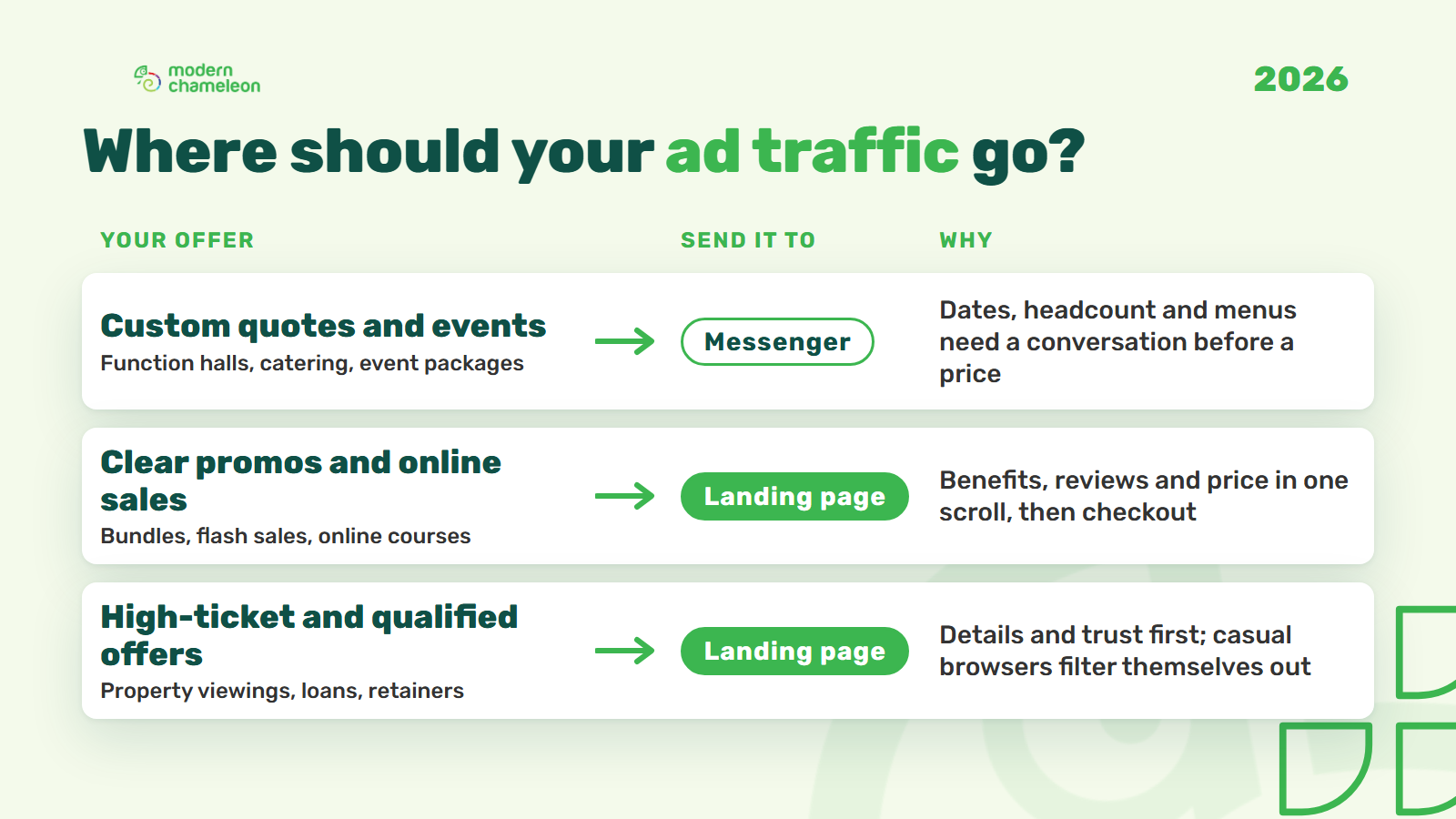
1. Messenger vs. Landing Page: The Decision Matrix
Filipino customers like to message a business first (“How much po?”). Messenger isn’t dead. But using it for every type of offer is a costly mistake. Use this matrix to decide where to send your Facebook ad traffic.
2. The “Tire-Kicker” Filter: Protecting Your Sales Team’s Time
Run Click-to-Messenger ads for a broad offer and your staff will drown in casual “Details please” messages. Many come from people with no plan to buy, or who can’t afford your price.
A landing page works as an automatic tire-kicker filter. Many serious buyers would rather read your packages, price tiers and FAQs in one go. They don’t want to wait for a chat agent to copy and paste answers. When your full offer is on the page, window-shoppers leave on their own. The people who fill out your form or tap “Book Now” already know what they’re buying.
3. Diagnosing the Bottleneck: Outbound CTR vs. Conversion Rate
When a Facebook ad campaign brings no sales, most owners panic and delete everything. At Modern Chameleon, we look at one number first: outbound CTR. That’s the share of people who click through to your page.
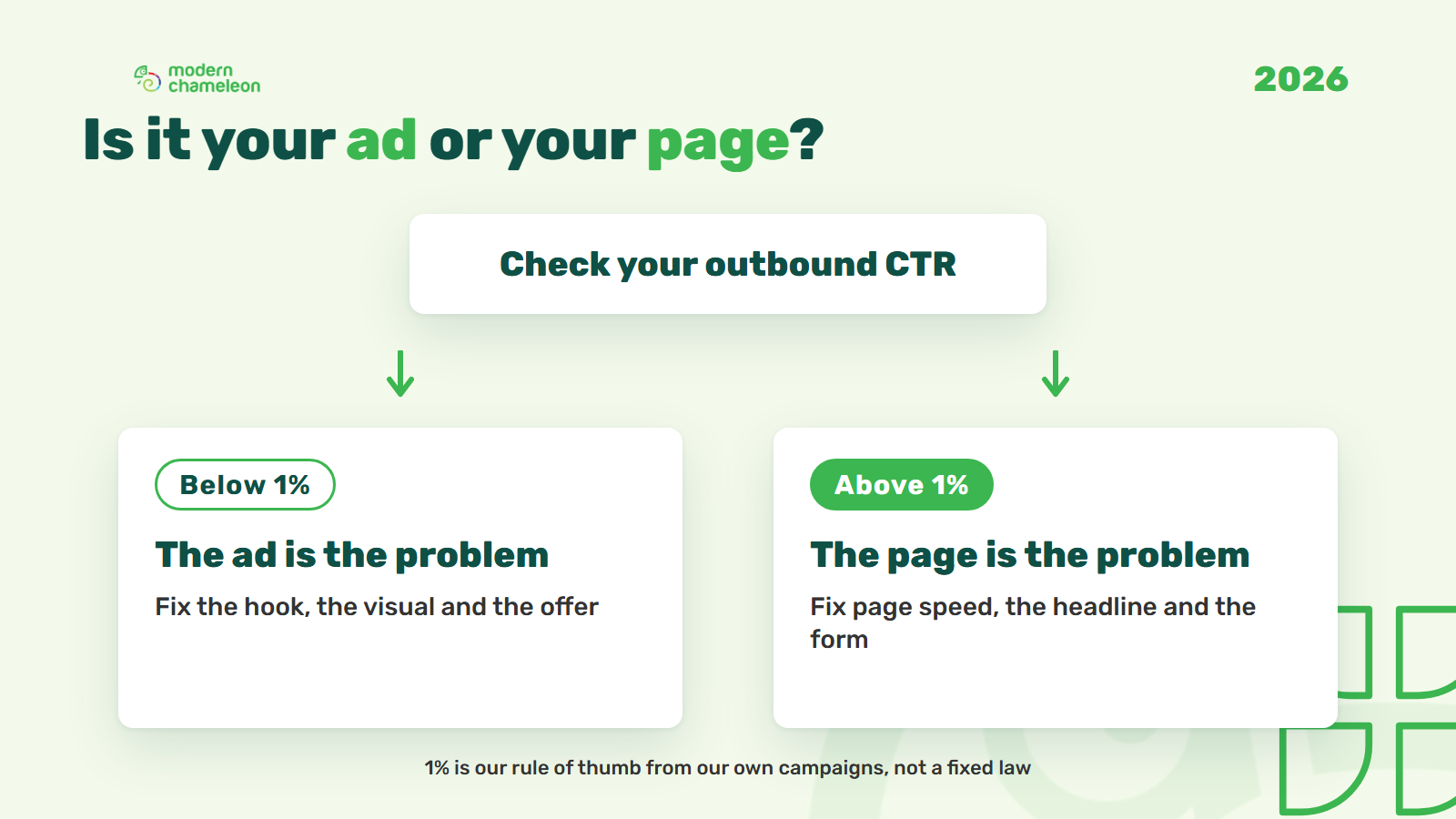
Our rule of thumb is 1%. It is a starting line from our own campaigns, not a law.
If outbound CTR is below 1%: your landing page isn’t the problem, because hardly anyone is reaching it. Your creative, hook or targeting isn’t stopping the scroll. Fix the ad first, and check what you’re paying per click in how much Facebook ads cost in the Philippines.
If outbound CTR is above 1% but you have no sales or leads: your ad is doing its job. The page is losing people. Check how fast it loads on mobile. Make the offer in your headline clearer. Shorten your checkout or inquiry form.
4. The Mobile Speed and Data Reality in the Philippines
One big reason Click-to-Messenger ads stay popular here is the internet. Messenger loads fast even on weak mobile data or a prepaid promo.
Now picture paid traffic landing on a heavy page full of uncompressed images. Mobile users hit “Back” before the hero banner even shows. Your bounce rate climbs, and you still pay Meta for every click. We build every landing page mobile-first with compressed images, so it opens fast on local networks. The same rules apply to a full site, as we explain in how to turn your website into a salesperson.
5. Anatomy of a High-Converting Philippine Landing Page
To convert local visitors within seconds, put these three things at the top of the page, before anyone scrolls:
- A local problem-and-solution headline: name the buyer’s pain point and your answer. It often mixes English with Taglish or Cebuano.
- The offer and social proof: real testimonials, star ratings or verified client results right below the headline.
- One goal, one button: a clear button like “Claim 40% Off Now” or “Book Your Free Site Visit”. Repeat the same button down the page, and remove the navigation menu.
6. Real-World Application: Modern Chameleon in Action
The hidden friction: Mariland Lending serves teachers and market vendors in Cebu. Applicants had to download dense forms, fill them out and send them back. Staff spent their time chasing files, and qualified applicants dropped out halfway.
Our intervention: we built a step-by-step online application into Mariland’s website. Applicants answer a few questions at a time on their phones instead of facing one long form.
The result: the page qualifies each applicant and sends complete details straight to Mariland’s team. Staff no longer chase missing paperwork.
7. The Meta Pixel and Retargeting Advantage
Some people click a Messenger ad and leave without sending a message. You can only retarget them as ad engagers, and you don’t know what they wanted. Send that traffic to a landing page with the Meta Pixel instead. Then you see what every visitor did on the page.
You can then build Custom Audiences of “window shoppers.” Show them testimonial ads or limited-time discount reminders. These reach people who read your offer and got distracted before checking out. Over time, cold clicks turn into warm buyers.
8. Cost and Timeline Reality
A landing page that sells doesn’t take months or an enterprise budget. For Philippine SMEs, a custom, mobile-optimized landing page usually costs ₱15,000 to ₱25,000. At Modern Chameleon, it takes about one week from kickoff to launch. That covers discovery, copywriting, design and Pixel setup. For full websites, see our guide to website design costs in the Philippines.
Stop Drowning in Manual DMs
Paying for Facebook ad clicks that end in dead “How much po?” chats? At Modern Chameleon, we build mobile-first landing pages that answer buyers’ questions and turn ad clicks into real inquiries. Message us or contact us through the form to get started.